I Use AI-Generated Art for My Medium Articles. Here’s Why I Don’t Feel Bad About It.
They suggested I sketch my own images. Or snap photos on my phone. Or use free stock photos from Unsplash.

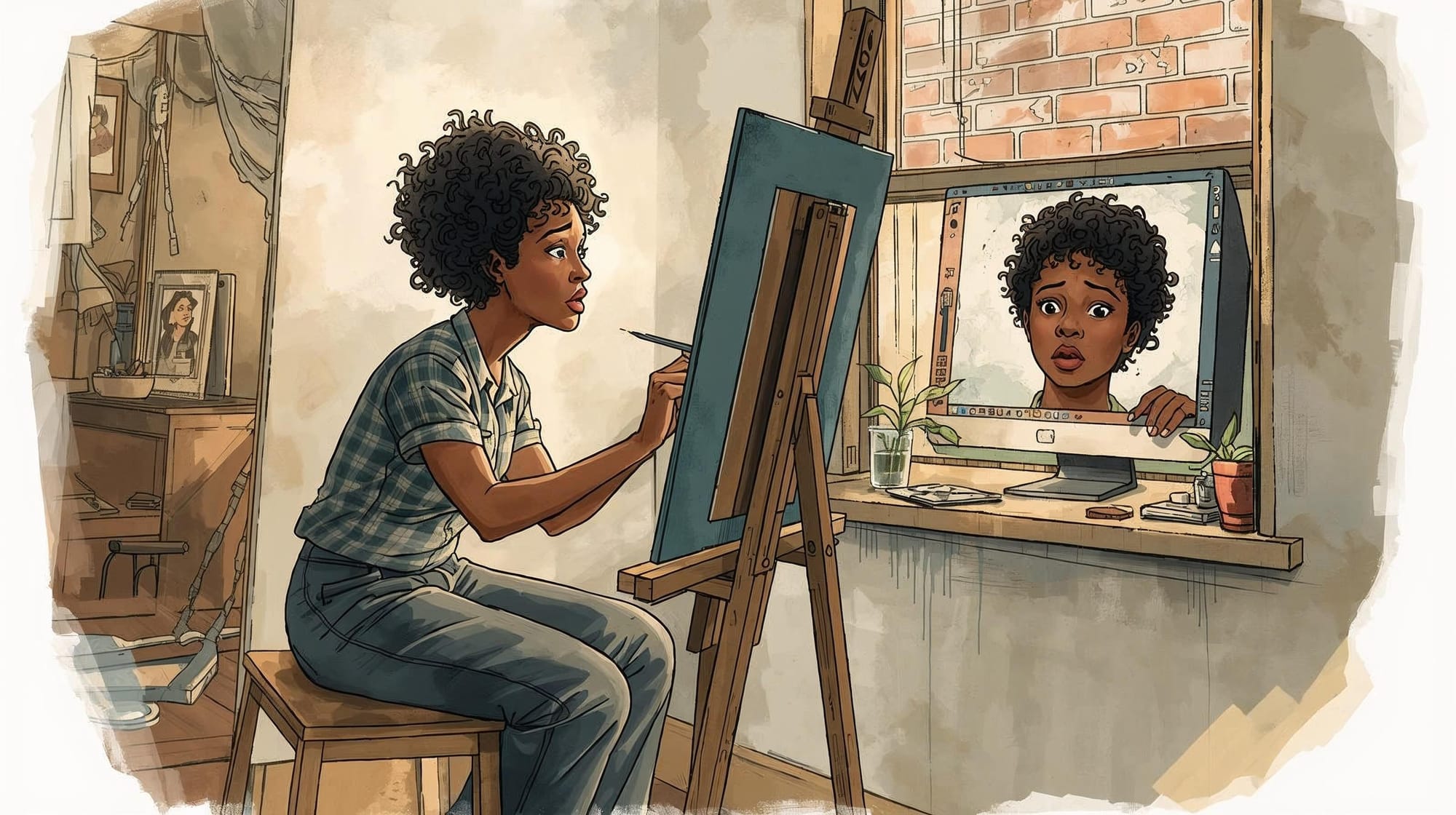
Artists are competing with AI. So are writers. So are lawyers and doctors. Welcome to 2026. We all evolve or die.
Someone left a comment on my article today that stopped me cold.
They said they liked my writing. That they were rooting for me. That my very human stories resonated with them.
But then they said: “Using AI to generate images cheapens it.”
They suggested I sketch my own images. Or snap photos on my phone. Or use free stock photos from Unsplash.
Because AI-generated art is theft. Because it steals from real artists. Because it’s not authentic. And at first, I felt defensive. Attacked. Like I needed to justify every choice I make.
But then I realized: I don’t need to justify it. I need to explain it.
Because this conversation matters. And pretending AI doesn’t exist or that we can just avoid it isn’t going to work.
I Post Every Single Day
Here’s the reality of my workflow: I write an article. Sometimes two. Every single day. I research. I outline. I write 1,500 to 2,000 words. I edit. I proofread. I format.
And then I need an image.
Not tomorrow. Not next week. Right now. Before I hit publish.
Because Medium articles with images perform better. Because readers engage more with visual content. Because a good header image makes people stop scrolling and actually read.
So I have a choice:
- I can spend an hour searching through free stock photo sites looking for something that kind of relates to my topic but has been used by 10,000 other writers.
- I can take a photo on my phone that has nothing to do with the article but at least it’s “authentic.”
- I can pay a professional photographer or graphic designer hundreds of dollars per image and wait days or weeks for delivery.
- Or I can type a prompt into an AI image generator and have a relevant, unique image in 30 seconds.
Which one do you think I’m going to choose when I’m publishing every day?
Stock Photos Are Dead
Medium gives you free stock photos when you publish. Curated images that supposedly match your content.
And they’ve been used to death.
The same businesswoman shaking hands. The same laptop on a desk. The same person staring thoughtfully out a window. I’m tired of looking at them. You’re tired of looking at them. Everyone is tired of looking at them.
AI lets me create images that actually reflect what I’m writing about. That match the tone and mood of my article. That feel fresh instead of recycled.
Is it perfect? No. Sometimes the hands look weird. Sometimes the faces are slightly off. But it’s better than the alternative. Which is the same stock photo everyone else is using.
I Can’t Afford Real Artists
Let me be blunt about something: I’m broke. I’m a 57-year-old freelance writer trying to support a family while rebuilding a career that collapsed years ago.
I don’t have hundreds of dollars to spend on custom artwork for every blog post. I would love to commission artists. I would love to pay photographers. I genuinely respect what they do and the skill it takes.
But I can’t afford it. Not when I’m publishing daily. Not when I’m barely covering rent.
So my choice is: use AI-generated images or use nothing. And using nothing means lower engagement. Fewer reads. Less income.
Which means I stay broke.
I’m not choosing AI over artists because I don’t value art. I’m choosing AI because it’s the only option I can afford.
Artists Learn From Other Artists Too
Here’s the argument I keep hearing: “AI was trained on other people’s work without permission. That’s theft.”
Okay. Let’s talk about that.
Every artist who ever lived learned from other artists. They studied techniques. They copied styles. They practiced by recreating existing work until they developed their own voice.
Photographers study composition by looking at other photographers’ work. Graphic designers learn color theory from designers who came before them. Writers read other writers and absorb their techniques.
Nobody learns in a vacuum. Everyone builds on what already exists. AI does the same thing. It learns from existing images. It identifies patterns. It generates new images based on what it’s learned.
Is it the same as human learning? No. But is it fundamentally different? I’m not sure it is.
When I prompt an AI to create an image, I don’t ask for “art in the style of [specific artist].” I don’t try to replicate someone’s unique work.
I ask for generic concepts. A desert landscape. A person writing at a desk. An abstract representation of struggle.
Could those images have come from any of the thousands of images the AI trained on? Yes. Just like my writing could have been influenced by any of the thousands of articles I’ve read.
That’s how learning works. Human or artificial.
I Use My Own Photos When I Can
If you go back through my older articles, you’ll see photos I took on my phone. Screenshots. Images from my actual life. I do that when it makes sense. When I have a relevant photo. When the article is personal enough that my own images add value.
But most of my articles aren’t photo essays. They’re about abstract concepts. Job searching. Freelancing. Mental health. Career transitions.
There’s no photo on my phone that captures “the desperation of waiting 30 days for an invoice to clear.” But here is what AI came up with:
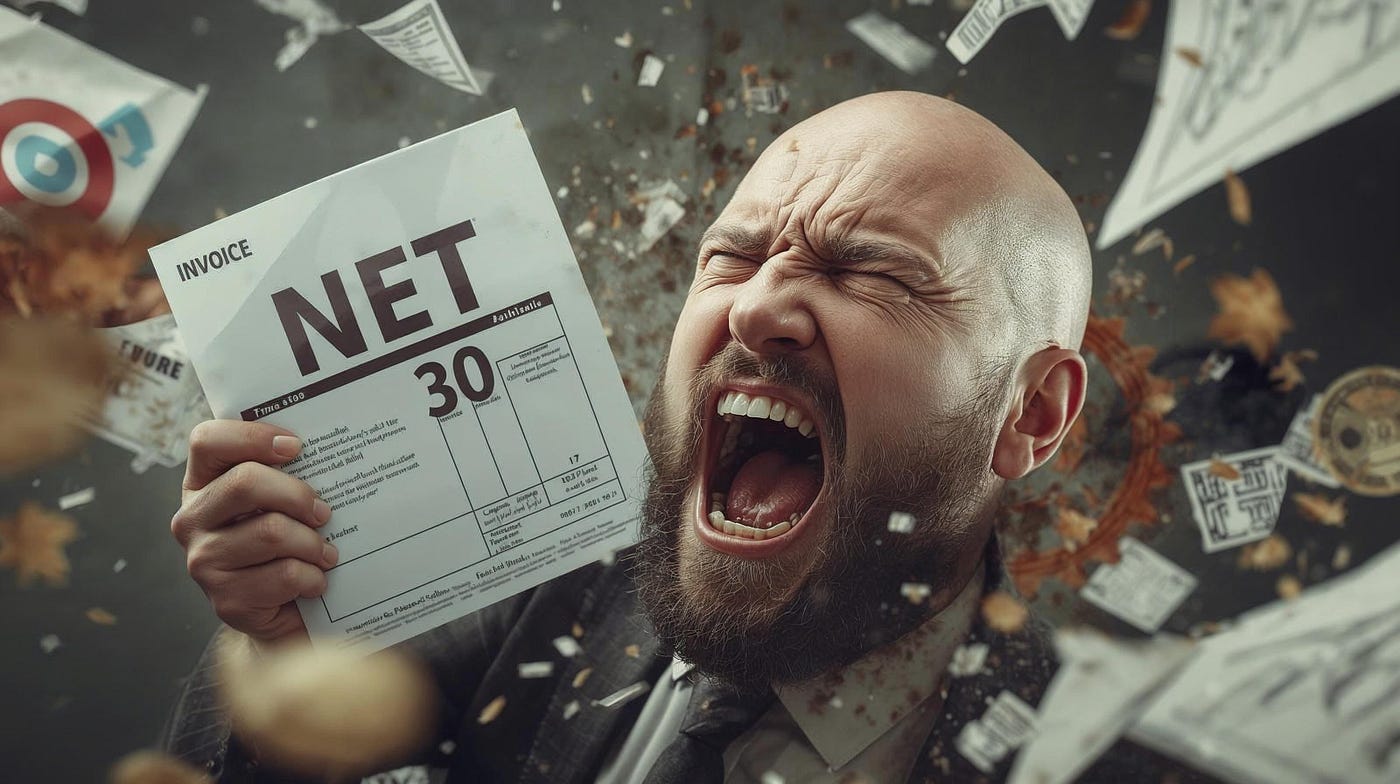
So I use AI to create an image that represents that feeling. Its emotional and a little funny.
And I don’t feel guilty about it.
We’re All Competing With AI Now
Here’s the reality nobody wants to face: AI isn’t just coming for artists. It’s coming for all of us.
Writers. Lawyers. Doctors. Accountants. Programmers. Designers. Photographers. Everyone who makes a living with knowledge work is competing with AI.
I’m competing with AI-generated articles. Lawyers are competing with AI legal research. Doctors are competing with AI diagnostics.
It’s not just artists. It’s everyone. And we have two choices: adapt or die.
I don’t mean that dramatically. I mean it practically. We can rage against AI and refuse to use it and watch our careers become obsolete. Or we can figure out how to use it as a tool while maintaining our humanity and our unique value.
I choose the second option.
AI Is Technology Evolving
Remember when the internet was going to destroy traditional media? It did. But it also created new opportunities.
Remember when word processors were going to make writers lazy? They didn’t. They made writing more accessible.
Remember when digital photography was going to kill professional photographers? Some jobs disappeared. But new ones emerged.
AI is the same thing. It’s technology evolving. And we evolve with it or we get left behind.
I still love human artwork. I still appreciate the skill and creativity that goes into real art.
I love Native American sand paintings. I love the photography of Peter McKinnon. I love paintings and sculptures and hand-drawn illustrations.
But I also love AI-generated sci-fi art. I love being able to create an image that matches my article in seconds. I love having access to visual content I could never afford otherwise.
Both things can be true.
The AI Bubble Might Pop
The commenter mentioned something important: what happens when AI becomes too expensive or unavailable? That’s a valid concern. If I become completely dependent on AI for images and it disappears or becomes unaffordable, I’m stuck.
But here’s the thing: I’m not completely dependent on it.
I know how to take photos. I know how to use stock images. I know how to create simple graphics in Canva.
AI is a tool that makes my life easier right now. But if it goes away, I’ll adapt.
Just like I adapted when Medium changed its algorithm. Just like I adapted when clients stopped paying on time. Just like I adapted when the job market collapsed.
Adaptation is what I do. It’s what all of us do when we’re trying to survive.
This Isn’t About Being Lazy
Using AI-generated images isn’t laziness. It’s efficiency. It’s recognizing that I have limited time and resources and I need to make choices about where to spend them.
I choose to spend my time writing. Creating content that helps people. Telling stories that matter.
And I use AI to handle the visual components so I can focus on what I’m actually good at.
If that cheapens my work in some people’s eyes, I can live with that.
Because the alternative is spending hours on tasks that don’t leverage my actual skills. Or paying money I don’t have. Or publishing without images and watching my engagement drop.
None of those options work for me.
To the Artists Reading This
I get it. I really do.
You spent years developing your skills. You invested time and money and energy into becoming good at what you do. And now AI can create something similar in seconds. For free.
That’s not fair. I won’t pretend it is. But it’s reality. And we’re all dealing with the same thing. I don’t want to take work away from artists. I genuinely don’t.
But I also can’t afford to hire artists for every blog post. And I can’t stop publishing while I wait for the AI debate to resolve itself.
So I’m doing the best I can with the tools I have access to. If that makes me part of the problem, I don’t know what to tell you. Because from where I’m sitting, we’re all just trying to survive in a world that’s changing faster than any of us can keep up with.
This Is Where We Are
AI-generated images aren’t perfect. They’re not as good as real art created by talented humans. But they’re good enough. And they’re accessible. And they let me create content every single day without going broke.
So I use them. And I’m not going to apologize for it anymore.
Does that make sense?
Or am I still missing something?